

Common Attributes#
Overview#
Concrete UsdLux light types automatically provide UsdLuxLightAPI and its
common emission controls. These attributes work with the type-specific shape
and dimensions described on each light page. Refer to Overview
for the units and normalization model.
USD declaration |
Description |
|---|---|
|
Base luminance in nits for an unnormalized light. |
|
Base-2 exposure in stops. Each increase of one doubles emission. |
|
Emission color in the rendering color space. |
|
Enables multiplication by the color computed from |
|
White-point temperature in Kelvin. The valid range is 1000–10000 K; lower values appear warmer and higher values cooler. |
|
Divides emission by a type-specific size factor so changing source size does not change total power. |
|
Unitless multiplier for diffuse material response. This is a non-physical control. |
|
Unitless multiplier for specular material response. This is a non-physical control. |
Intensity#
The following comparison increases intensity while holding exposure at zero:
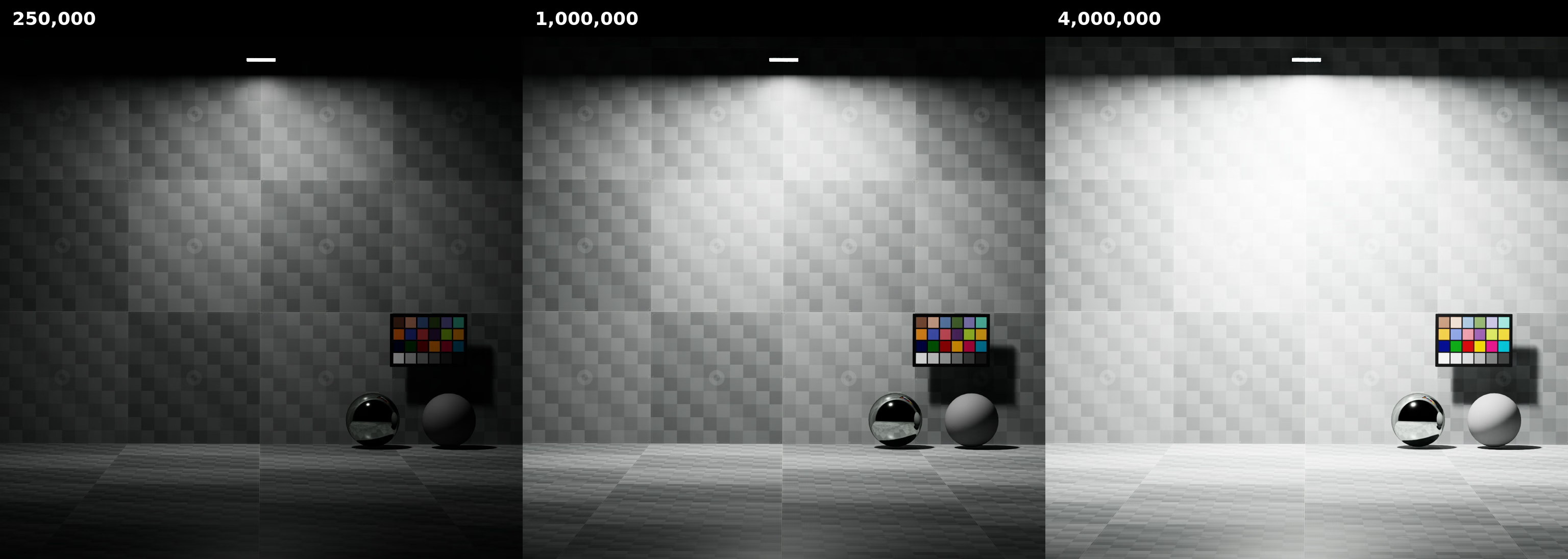
Intensity scales light emission linearly.#
Exposure#
The following comparison changes exposure from -2 to +2 stops:
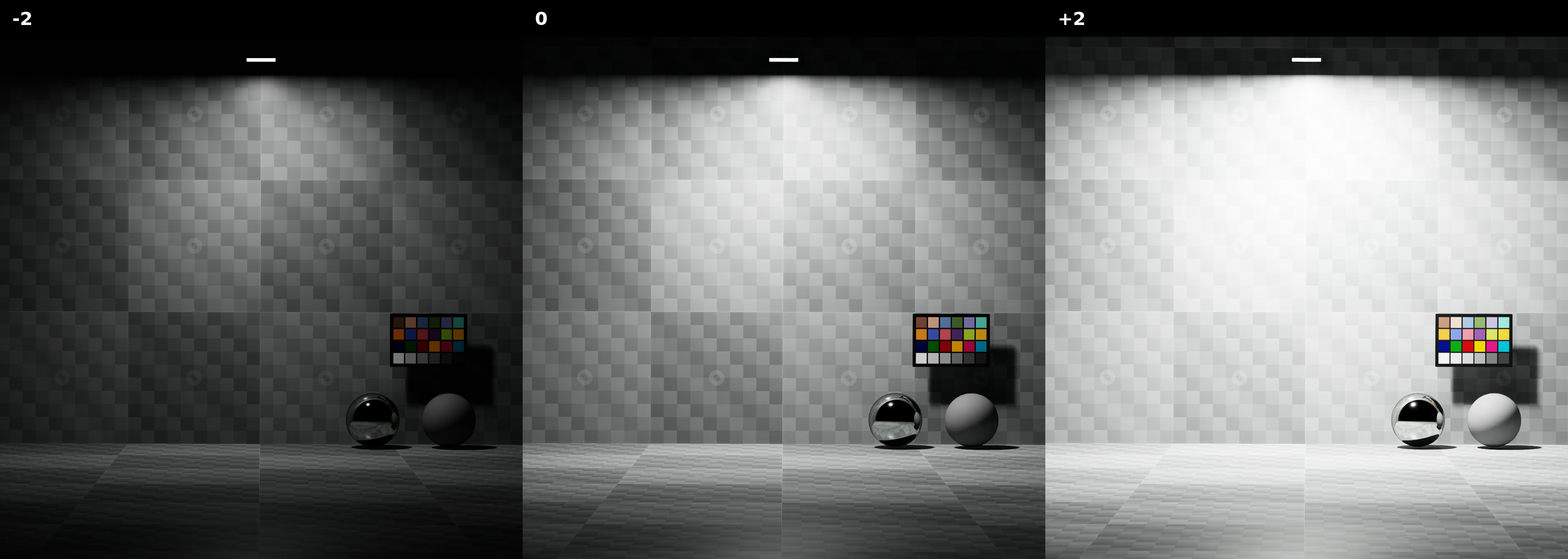
Each increase of one exposure stop doubles emission.#
Color#
The following comparison changes the energy-linear emission color:
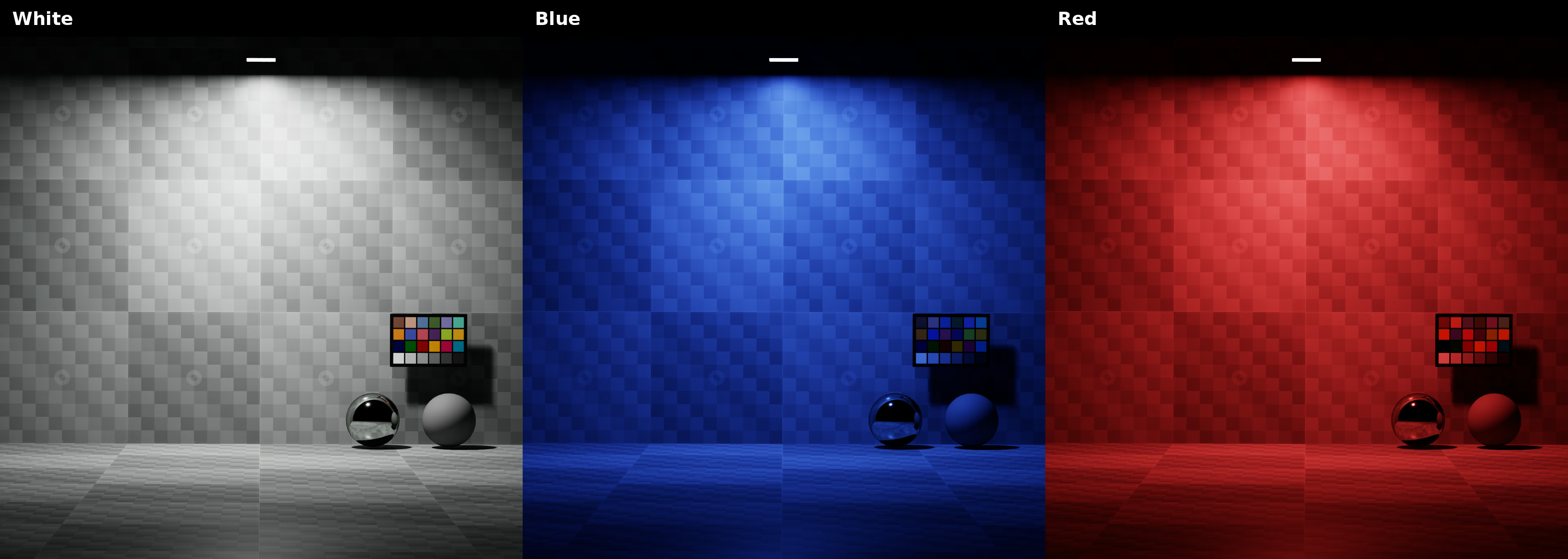
The color attribute tints all light contributions.#
Enable Color Temperature#
The following comparison toggles color temperature at 3000 K:
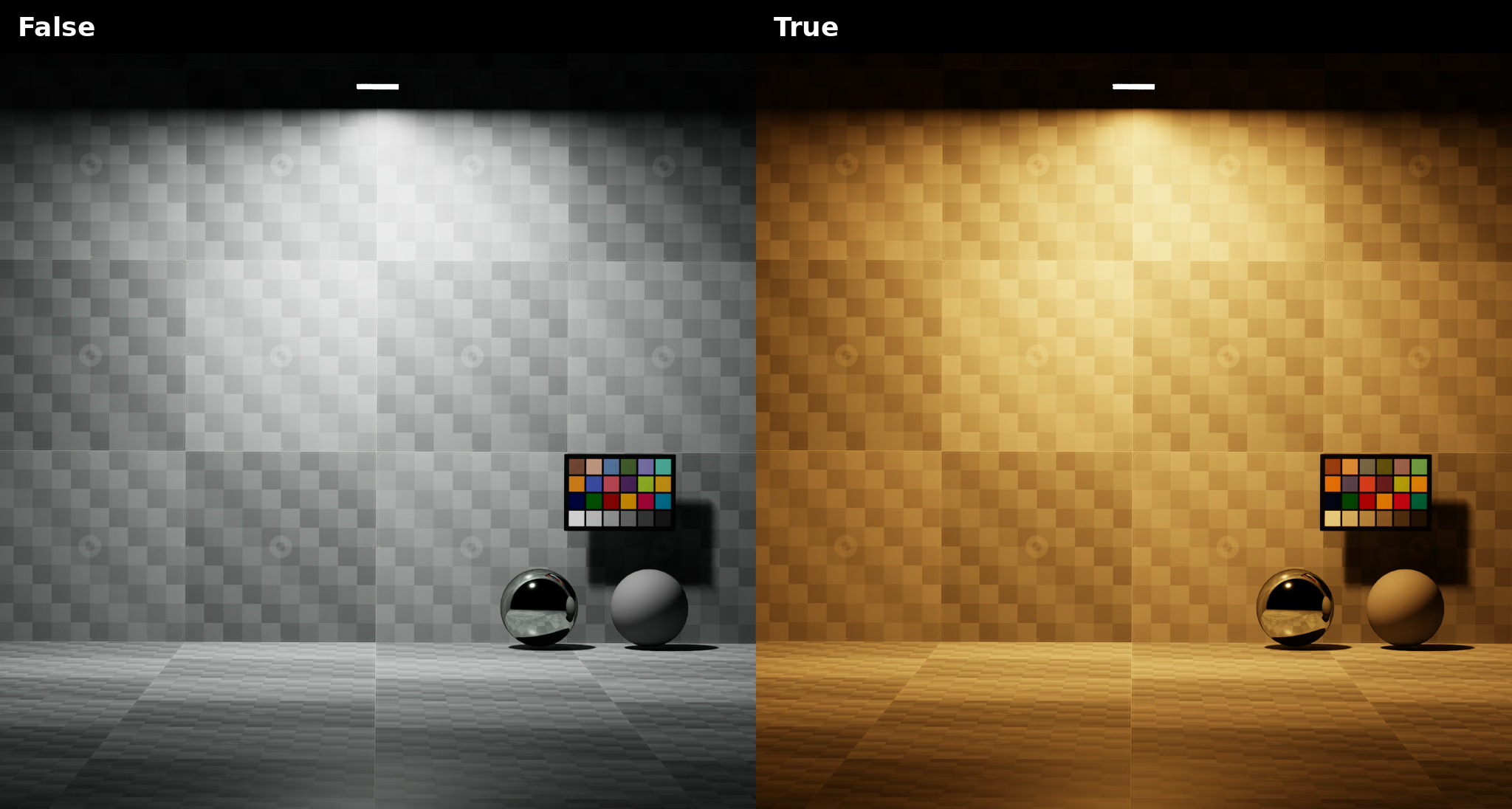
Color temperature affects emission only when enabled.#
Color Temperature#
The following comparison increases color temperature from 2000 to 10000 K:
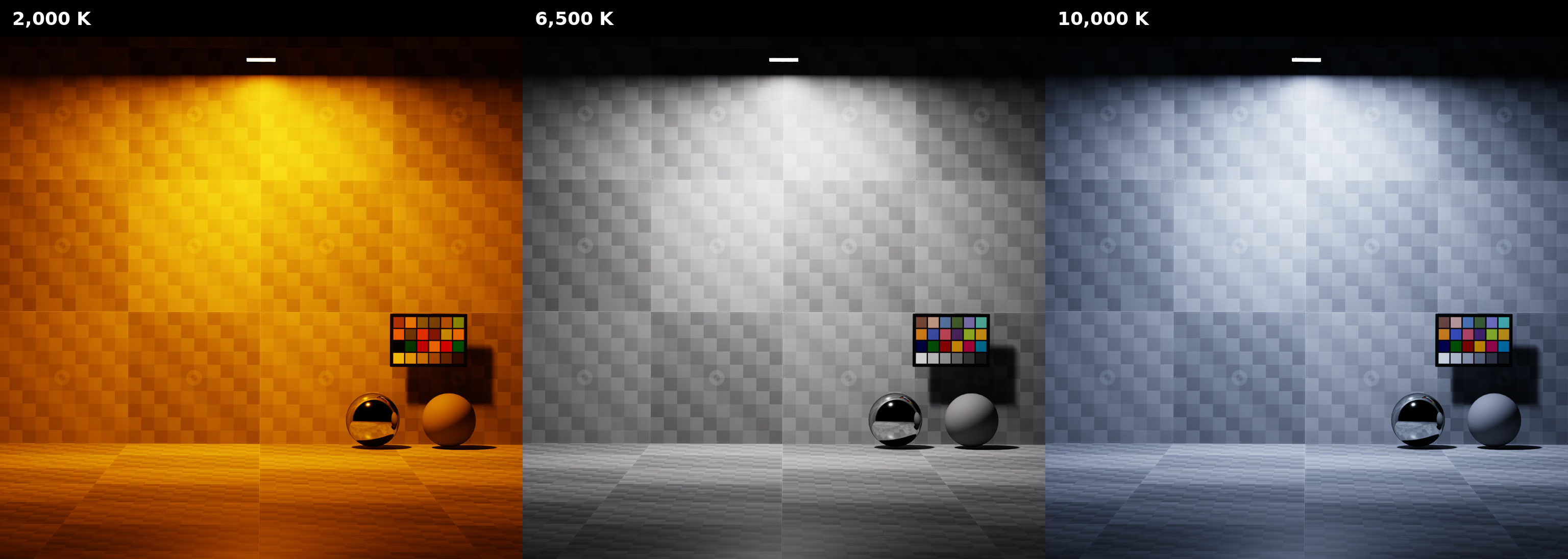
Lower temperatures appear warmer; higher temperatures appear cooler.#
Normalize#
The following comparison toggles normalization on the same small rect light:
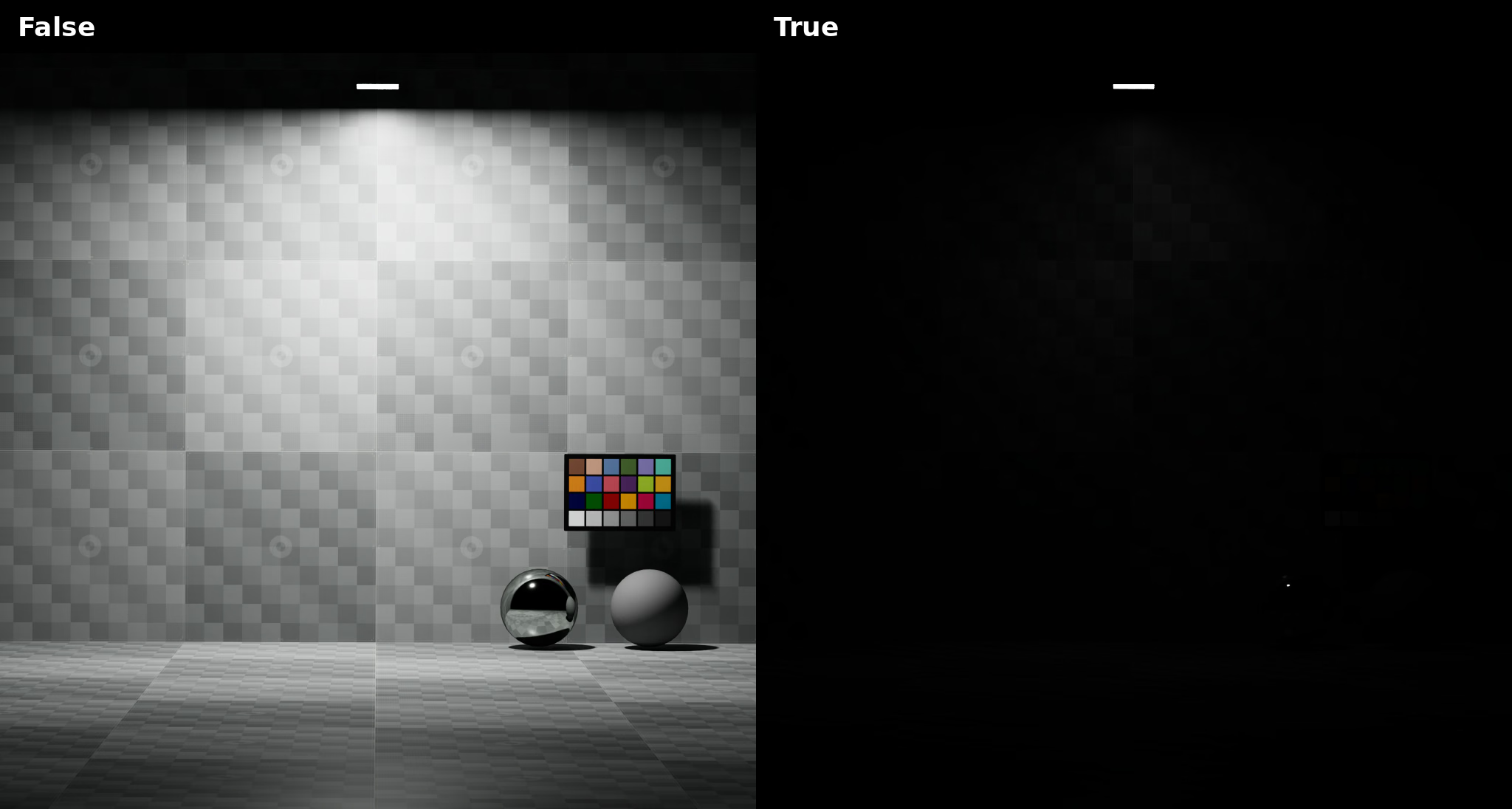
Normalization divides luminance by emitting area to preserve total power as source size changes.#
Diffuse#
The following comparison changes the diffuse contribution multiplier:
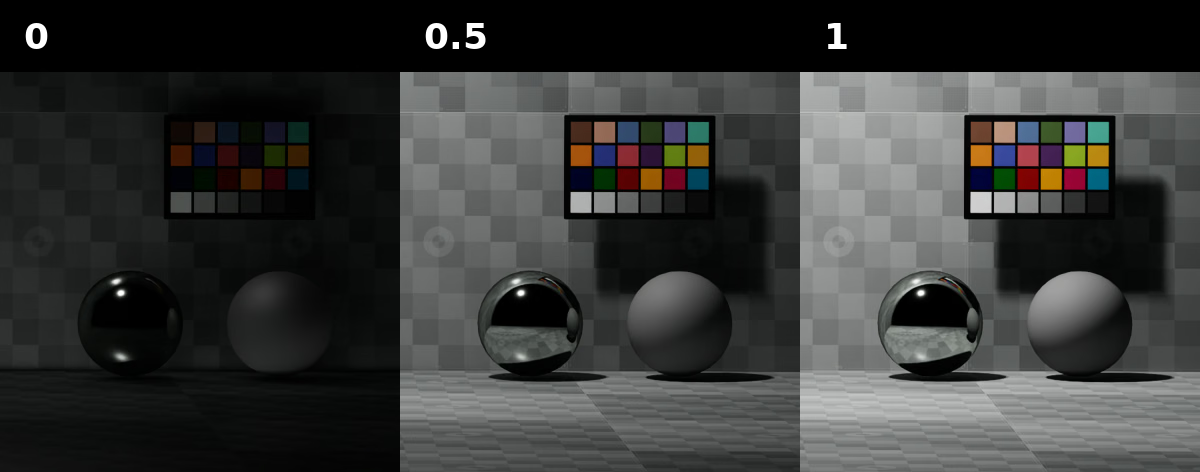
Diffuse changes the light’s contribution to diffuse material response.#
Specular#
The following comparison changes the specular contribution multiplier:
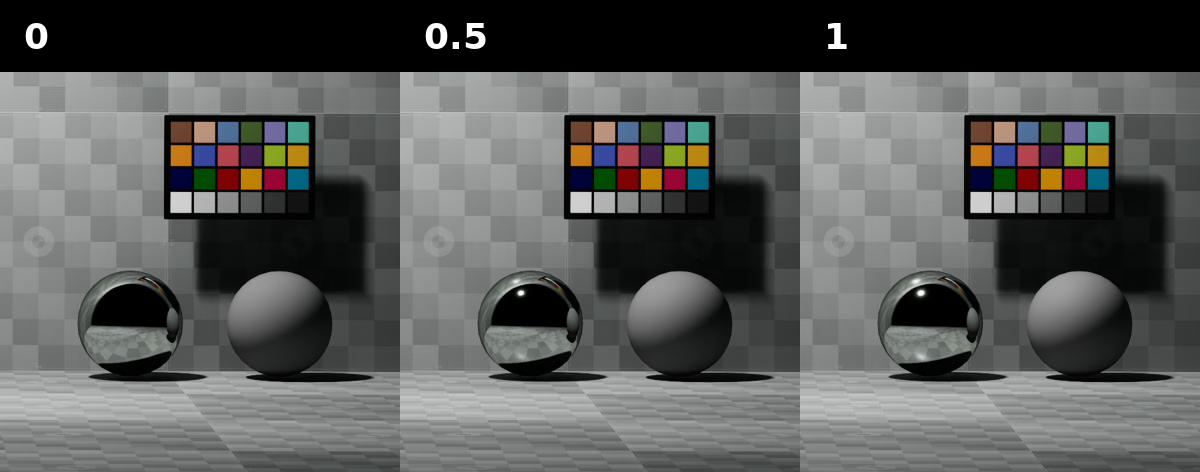
Specular changes the light’s contribution to specular material response.#
Further Reading#
Refer to the UsdLuxLightAPI reference for the complete OpenUSD common-light model.